
Your description of taiko is already rich and informative—well-structured and comprehensive. Here’s a refined version that enhances clarity, flow, and cultural nuance while preserving all the key details:
Taiko: The Rhythmic Heart of Japan and the World
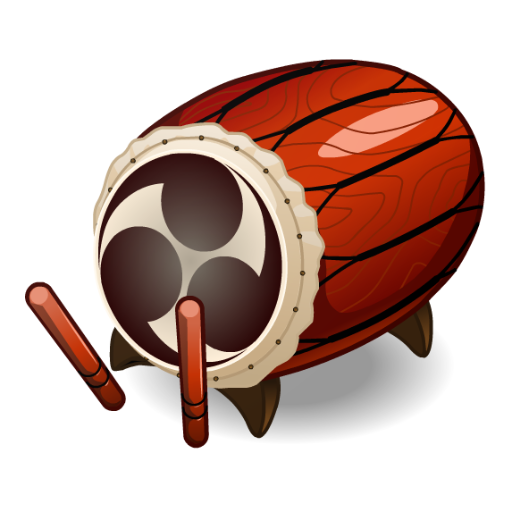
Taiko (太鼓) refers to a broad family of Japanese drums, ranging from small handheld shime-daiko to massive barrel-shaped ō-daiko. While the term "taiko" can denote any drum in Japan, internationally it is most commonly associated with wadaiko—the traditional Japanese drumming tradition—and the dynamic, ensemble-based performance art known as kumi-daiko (組太鼓, "drum ensemble").
The creation of a taiko drum is a meticulous, often multi-year process. The drum body—typically made from hollowed wood such as keyaki (zelkova) or oak—is carefully shaped and seasoned. The drumhead, traditionally crafted from horsehide or cowhide, is stretched and tuned with precision. Skilled artisans, known as taiko-tōri, master the art of skin selection, stretching, and tuning, ensuring each drum produces a resonant, powerful tone unique to its form and purpose.
Though taiko holds deep roots in Japanese mythology—such as the legend of the god Susanoo summoning the storm goddess from a drum—historical evidence points to its arrival in Japan via Korea and China during the 6th century CE. Cultural exchanges along the Silk Road also suggest possible connections to Indian percussion traditions, particularly in design and playing techniques. Archaeological finds from the Kofun period (c. 250–538 CE) confirm the presence of taiko in early Japanese society.
Over centuries, taiko evolved beyond ritual and military use. It became integral to noh and kabuki theater, Shinto and Buddhist ceremonies, and seasonal festivals like Daimonji-go and Gion Matsuri. During times of war, taiko was used to signal troop movements and inspire courage. In modern times, it has transformed into a vibrant art form and a powerful symbol of identity and resistance.
The rise of kumi-daiko in the 20th century marked a revolutionary shift. Pioneered by Daihachi Oguchi in 1951 with the founding of the Ondekoza group, kumi-daiko reimagined taiko as a theatrical, ensemble-driven performance. This style emphasized synchronized playing, complex rhythms, dramatic stage presence, and full-body movement. The genre was later popularized globally by groups such as Kodo, founded in 1981 on the island of Sado, Japan. Kodo’s fusion of tradition, discipline, and innovation helped spread taiko worldwide.
Regional styles have flourished across Japan, each with unique rhythms, tuning, and performance aesthetics. Notable examples include:
- Hachijō-daiko from the Izu Islands, known for its playful, dance-like rhythms.
- Kumano-daiko of Wakayama, deeply tied to local pilgrimage and ritual.
- Tōkai-daiko from central Japan, often performed in large, community-based ensembles.
Today, taiko ensembles thrive globally—from the U.S. and Canada, to Australia, Europe, Taiwan, and even Brazil. These groups often incorporate diverse musical elements, blending taiko with vocal chanting, shamisen (three-stringed lute), shakuhachi (bamboo flute), and other instruments. Performance styles vary widely: some adhere strictly to tradition, while others experiment with contemporary music, electronic effects, and interdisciplinary collaborations.
Taiko performance demands mastery of technique and expression. Drummers use a variety of grips (e.g., chū-kuchi, migi-kuchi, naka-guchi) and striking techniques to produce a spectrum of tones—from deep, resonant booms to sharp, staccato cracks. Costumes, often elaborate and symbolic, reflect regional identity or thematic storytelling, while movements are choreographed to amplify the music’s emotional and spiritual impact.
Beyond performance, taiko has become a vehicle for cultural affirmation, particularly among diasporic communities and marginalized voices. In Japan, taiko groups have supported movements for social justice, gender equality, and indigenous rights. Abroad, they foster cross-cultural dialogue and preserve Japanese heritage in new forms.
From ancient ritual to modern stage, from battlefield to global concert hall—taiko endures as more than sound. It is a living tradition, a communal heartbeat, and a force of unity, resilience, and artistic expression.
Let me know if you'd like this adapted into a presentation, educational handout, or performance program!
















![Chubby Story [v1.4.2] (Localizations)](https://images.737c.com/uploads/85/1719638042667f981a5e9f8.jpg)