
You've provided a rich and informative overview of taiko—an evocative and culturally profound art form rooted in Japan but now celebrated globally. Here's a refined and expanded version of your text, suitable for educational or exhibition use, with enhanced flow, clarity, and depth:
Taiko: The Resonance of Power and Spirit
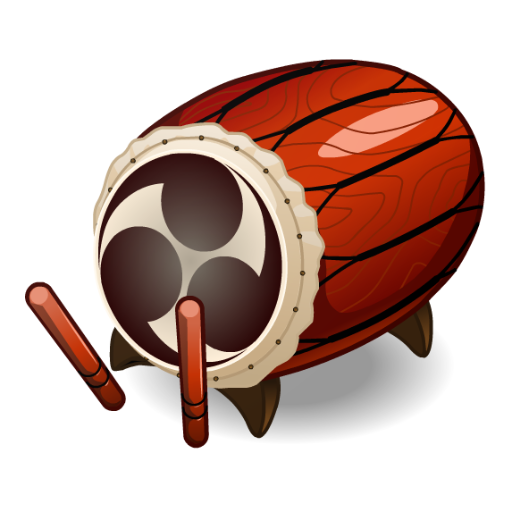
Taiko (太鼓), meaning "great drum" in Japanese, refers to a diverse family of traditional Japanese percussion instruments. While the term can technically encompass any drum in Japan, internationally, "taiko" most commonly denotes wadaiko (和太鼓, "Japanese drums") and the dynamic, ensemble-based performance art known as kumi-daiko (組太鼓, "drum ensemble").
Craft and Craftsmanship
Each taiko drum is a testament to artistry and patience. The process of crafting a single drum—often taking years—begins with the selection of wood: typically cypress (hinoki) or zelkova (katsura) for the body, chosen for their resonance and durability. The drumhead, traditionally made from cattle hide (ushiko), is stretched across the body with intricate tensioning techniques. Skilled artisans use methods like kumikata (drum-tightening) and shimekomi (hand-tightening) to shape the drum’s pitch and tonal quality. The result is a powerful instrument capable of producing deep, thunderous bass tones (bō) and sharp, crackling slaps (kuchi).
Historical Roots and Cultural Evolution
Though deeply embedded in Japanese culture, taiko’s origins trace back to cross-cultural exchange. The instrument arrived in Japan via Korea and China as early as the 6th century CE, influenced by ancient Chinese and Korean drumming traditions. Some scholars note striking similarities between taiko and instruments found in India’s classical percussion traditions, suggesting broader transcontinental connections. Archaeological evidence from the Kofun period (c. 250–538 CE) confirms taiko’s presence in ritual and ceremonial life.
Over centuries, taiko evolved from instruments of war and communication to vital elements in Buddhist and Shinto rituals, Noh and Kabuki theater, and regional festivals (matsuri). In rural communities, taiko was used to signal events, coordinate labor, and honor deities—its sound believed to purify space and awaken the spirit.
Modern Revival and Global Expansion
The 20th century witnessed a transformative revival of taiko as an art form. In 1951, Daihachi Oguchi, a former schoolteacher and musician, founded the Ondekoza group in the mountains of northern Japan. His vision was to reclaim taiko as a living, expressive art—no longer limited to ritual or tradition. This innovation gave rise to kumi-daiko, a dynamic performance style that combines precise rhythm, dramatic movement, and unified stage presence.
Oguchi’s student, Seidō Kōdō, later co-founded Kodo, one of the most influential taiko groups in the world. Kodo not only preserved the spiritual depth of taiko but also pushed its artistic boundaries, touring globally and collaborating with musicians across genres—from jazz to electronic music.
Regional Styles and Unique Expressions
Taiko varies widely across Japan’s regions, each with distinct techniques, rhythms, and sounds:
- Hachijō-daiko (from Hachijō Island): known for its fast, intricate patterns and use of natural materials.
- Kumano Taiko: rooted in Shinto pilgrimage routes, emphasizing spiritual resonance.
- Sado Taiko: features deep, meditative rhythms tied to the island’s seasonal cycles.
These regional styles reflect local identity and ecological rhythms, making taiko not just music, but a living expression of place.
Performance and Innovation
Kumi-daiko ensembles typically feature a mix of drums:
- Nagadō-daiko (large, barrel-shaped drums): produce deep, resonant tones.
- Shime-daiko (smaller, tensioned drums): used for sharp, precise strikes and melodic phrasing.
Performances integrate not only rhythm but also physicality—dramatic posture, synchronized movement, and powerful facial expressions. Dancers and drummers often wear traditional hachimaki (headbands), hakama (wide-legged pants), and tomesode (formal kimonos), adding visual drama.
Many modern groups incorporate vocal chanting, flutes (shakuhachi), string instruments (koto), and even electronic elements, bridging ancient tradition with contemporary innovation.
Taiko in the Global Landscape
Today, taiko thrives worldwide. Ensembles exist in the United States, Canada, Australia, Europe, Taiwan, and Brazil, often serving as cultural bridges and instruments of social change. In multicultural communities, taiko has become a powerful medium for identity expression, community building, and activism—used in protests, peace ceremonies, and youth programs.
From the drum circles of San Francisco to the festivals of Berlin, taiko continues to inspire. It is not merely a rhythm, but a spiritual force—a heartbeat that echoes across time, culture, and conscience.
In the words of Kodo’s founder, Min Tanaka:
"The taiko is not just a drum. It is a living spirit, a voice of the people, a sound of the earth, and a prayer for peace."
Let me know if you’d like this adapted into a brochure, museum exhibit script, educational lesson plan, or video narration!


















![Chubby Story [v1.4.2] (Localizations)](https://images.737c.com/uploads/85/1719638042667f981a5e9f8.jpg)